
Flock cameras in Texas
What's on the public record about automatic license-plate-reader surveillance in Texas — and how to check your own town.
Texas shows how hard Flock is to switch off
Texas is a case study in how difficult it is for a city to actually walk away from Flock — and how the same technology can look very different depending on where you stand. Austin ended its Flock contract in 2025, only for police to keep tapping the data through neighboring departments and for the state to install its own cameras on Austin's roads. Texas is also where one of the most notorious cross-state ALPR searches originated.
Austin cancels — sort of
Austin's City Council piloted a license-plate-reader program in 2023 using Flock and Axon, then ended the Flock contract in June 2025 after residents raised concerns about ICE data-sharing and wrongful-arrest risks, and after an audit of the department's ALPR data. But it didn't end there. In February 2026, a KUT investigation found the Austin Police Department was still accessing Flock data through at least two neighboring agencies — Round Rock and Sunset Valley — by requesting searches of their cameras. Council member Mike Siegel called it a violation of the intent of the council's policy and pushed to close the loophole through the city's TRUST Act.
The state installs its own cameras
Days later, the Texas Department of Public Safety installed license plate readers along state rights-of-way in Austin — including on North and South Lamar and outside City Hall — on February 2, 2026, without disclosing all the locations, under state transportation permits. DPS wouldn't confirm whether the cameras were Flock's. The move let the state plant ALPRs in a city whose elected leaders had just voted the technology down, underscoring how little control one city has once neighboring and state agencies join the network.
A shooting reopens the debate
In May 2026, after a weekend shooting spree in Austin left four people injured and suspects fled in stolen cars, Mayor Kirk Watson and the police chief publicly floated reinstating license plate readers, noting the nearby city of Manor had used Flock to help locate the suspects. The council didn't move to renew that week, but the episode captures the central tension: the cameras' genuine investigative value versus the surveillance and data-sharing risks that led Austin to cancel in the first place.
The search that echoed nationwide
Texas is also where a search originated that reshaped the national debate. In 2025, a sheriff's deputy in Johnson County, Texas ran a nationwide ALPR lookup for a woman who had had an abortion — a search that reached cameras in states where abortion is legal, including Illinois, and helped trigger Illinois' statewide audit of Flock. (Flock says the Texas search was a family-initiated missing-person case, not abortion enforcement.) In a state with strict abortion laws, the episode showed how one department's search can pull in data from across the country.
Where the law stands
Texas has no statewide statute governing ALPR data retention or sharing; a regulation bill introduced in 2025 didn't advance. That leaves policy to individual cities and to instruments like Austin's TRUST Act, which is why the fights here are so local — and why a city's cancellation can be quietly undercut by a neighbor or the state.
How to find the cameras near you
There's no official public count of Flock cameras in Texas. Use the crowdsourced DeFlock map to see reported ALPR locations, the Atlas of Surveillance to see which agencies use them, and Have I Been Flocked? to check search activity. In Texas, remember that even if your city has no cameras, neighboring departments and state DPS cameras may still capture your plates.
How to take action in Texas
File a Public Information Act request with your police department for its Flock contract, camera locations, retention policy, and search audit logs — and ask specifically whether the department accesses other agencies' cameras, the exact loophole Austin's did. Ask your city council to cancel or decline to renew, and to close the "access-through-neighbors" gap in policy. Because Texas has no state law, local ordinances and council votes are the main levers.
Events and where to find more
Watch your city council agendas — Austin's ALPR debates have moved quickly and unpredictably. KUT and the Austin American-Statesman have led the local reporting. We'll list dated public events here as they're announced; if you're organizing one, tell us and we'll add it.
The law here
No statewide ALPR statute; a regulation bill was introduced in 2025 but did not advance. [Stateline — only 3 states passed ALPR laws (2025)]
What's documented
- Austin canceled its Flock program after 30+ community groups organized against it. [State of Surveillance — communities winning]
- Hays County terminated its Flock contract in October 2025, citing the company's practices. [State of Surveillance — communities winning]
Find the cameras
No official public count of Flock cameras exists for any state — the company doesn't publish one. These volunteer and watchdog maps are the best way to check your area:
What you can do
- File a public-records request with your police department for its Flock contract, camera count, audit logs, and whether "national/state lookup" sharing is on.
- Ask your city council or town board how much is being spent and who can access the data — and to end or not renew the contract.
- Tell your neighbors, and help map cameras that aren't on DeFlock yet.
- Chip in for stickers and spread the word.
Sources
Documentation is uneven by state and changes quickly. Every claim above links to its source; where a state has no entry, it means no widely-reported event — not that cameras are absent. This is lawful advocacy: we do not condone tampering with any equipment.
Frequently asked: Flock cameras in Texas
Are Flock cameras legal in Texas?
Texas has not enacted a comprehensive ALPR privacy law, so police and Flock operate with few state-level limits on how plate data is collected and searched. Your plate itself must stay readable: Texas Transportation Code §502.409 bans devices that impair a plate’s readability.
Has Flock data been misused in Texas?
Yes. Texas deputies used the Flock network to track a woman who had sought an abortion, framing the search as a missing-person case, which drew national scrutiny to interstate ALPR sharing.
Has any Texas city canceled Flock?
Yes. Austin organizers got the city’s Flock ALPR contract canceled in 2025, part of a wave of state and national pushback over federal and immigration access to the data.
What can I do about Flock in Texas?
Request records under the Texas Public Information Act, and press your city council on who can access the data and what it costs. Our Take Action page has a request template you can adapt.
Make it visible in Texas.
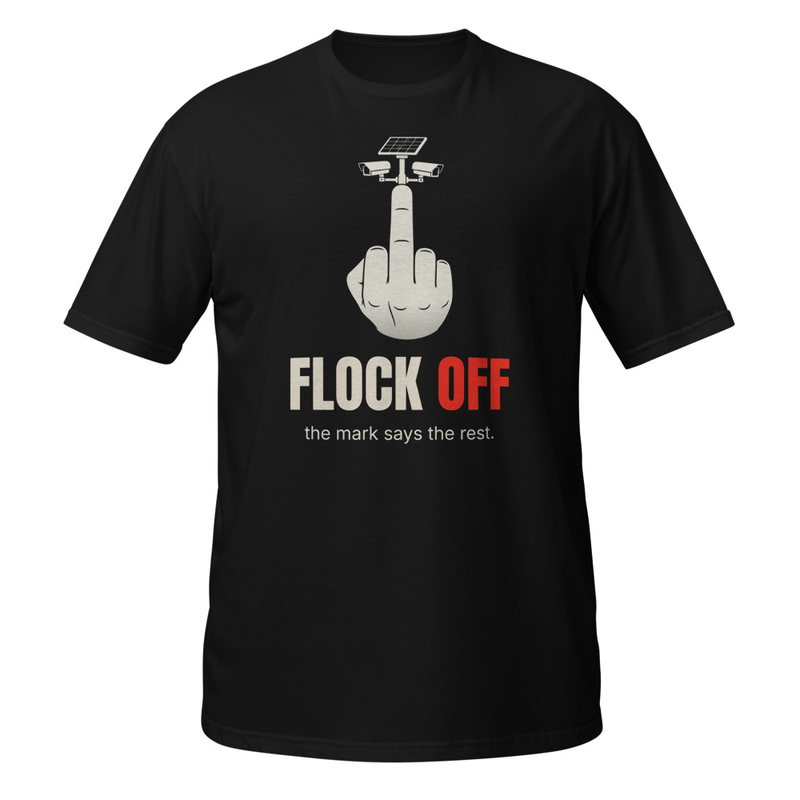
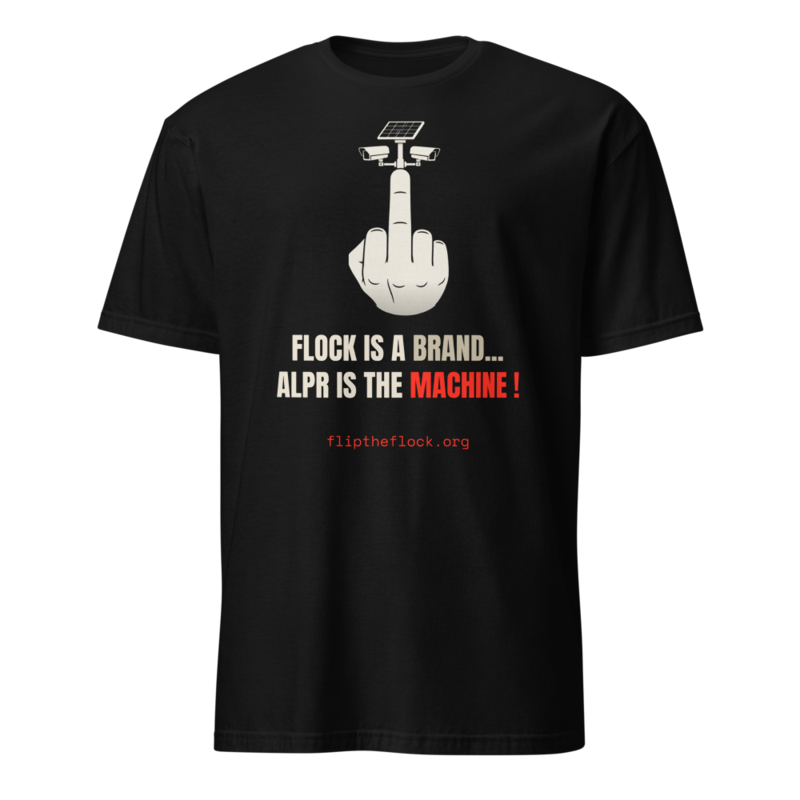
A sticker on a bumper or a shirt in the grocery line reaches people no post ever will — and it starts the question: what’s Flock? Every order funds the next print run.

Council alerts for Texas
When a Flock contract comes up for a vote in your state, or a sticker run ships, we'll tell you. No spam, just the fights.